
Exams do not just test students—they test families. As exams approach, homes often turn tense without anyone realizing it. Conversations become shorter, expectations louder, and emotions heavier. Students feel watched, parents feel helpless, and stress quietly takes control.
This guide is written for parents, not to judge, but to guide. Managing exam stress at home is not about controlling your child’s study hours—it is about creating an environment where your child feels safe, supported, and confident.
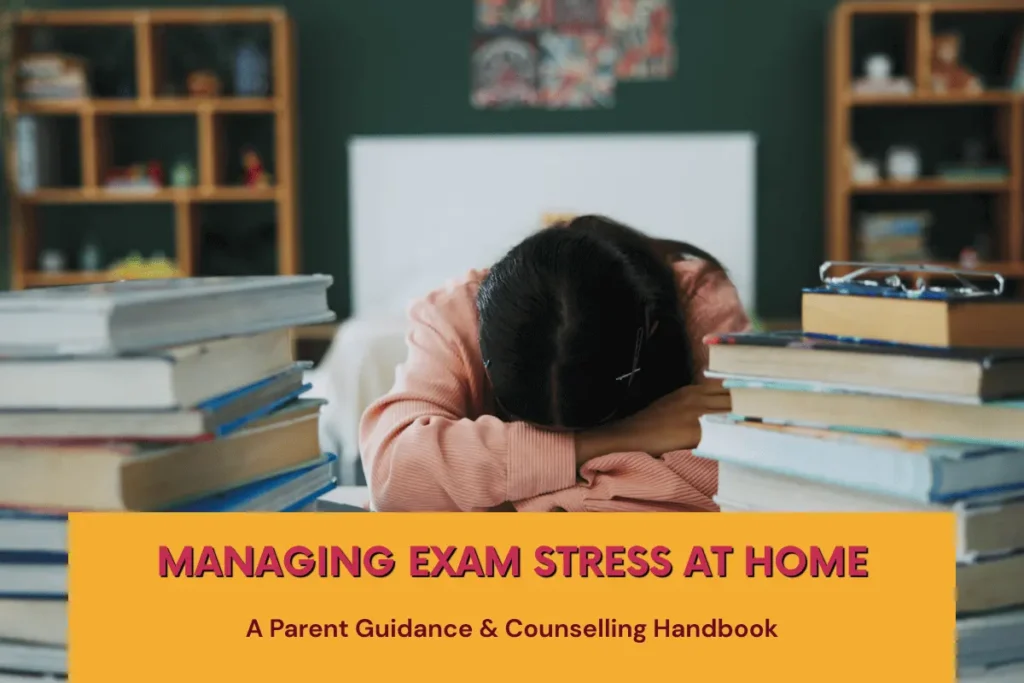
Understanding Exam Stress in Students
Exam stress is not always visible. Some students talk about it openly. Others hide it behind silence, anger, or overconfidence.
Stress often comes from:
- Fear of disappointing parents
- Fear of failure
- Comparison with peers
- Overloaded schedules
Ignoring stress does not make it disappear—it makes it stronger.
Why Home Environment Matters More Than We Think
School and coaching may teach academics, but home shapes emotional strength.
Emotional Safety vs Academic Pressure
A child who feels emotionally safe at home handles pressure better outside. When home becomes another exam center, stress doubles.
Stress Signals Parents Often Miss
- Sudden silence
- Irritability
- Over-studying without results
- Frequent physical complaints
These are not excuses—they are warning signs.
Common Causes of Exam Stress at Home
Unrealistic Expectations
Expectations are healthy. Unrealistic expectations are harmful. Every child has a different learning speed.
Constant Comparison
Comparing siblings, cousins, or neighbors silently tells a child: “You are not enough.”
Fear-Based Conversations
Statements like “This exam will decide your life” create fear, not motivation.
How Parents’ Words Shape a Child’s Stress Levels
Words spoken at home echo in a child’s mind during exams.
Statements That Increase Anxiety
- “You must get this rank”
- “We have invested so much in you”
- “Others are doing better than you”
Words That Build Confidence
- “We trust your effort”
- “Do your best, that’s enough”
- “Your health matters more than marks”
Encouragement fuels effort. Fear drains it.
Creating a Calm and Supportive Home Environment
Physical Space and Study Comfort
A simple, quiet, well-lit study area reduces distractions and mental fatigue.
Emotional Climate at Home
Arguments, loud discussions, or constant instructions increase anxiety.
Noise, Lighting, and Routine
Small changes make a big difference.
Respecting Study and Rest Time
Interruptions during study or rest break concentration and confidence.
Setting Healthy Expectations Without Pressure
Set expectations around:
- Consistency
- Effort
- Improvement
Not just ranks or marks. Growth-focused expectations reduce fear and increase resilience.
Encouraging Discipline Without Micromanaging
Discipline should be taught, not enforced hourly. Trust builds responsibility.
Checking notebooks every hour communicates doubt, not care.
Supporting Study Without Becoming the “Second Teacher”
Parents should guide, not interrogate.
Instead of asking:
“What did you study today?”
Try asking:
“How was your study today?”
The tone matters.
Managing Screen Time and Distractions at Home
Create family rules, not student-only rules. When parents model discipline, children follow naturally.
Balanced screen time reduces guilt and rebellion.
Role of Daily Routine in Reducing Stress
Sleep, Meals, and Breaks
A tired brain panics faster. Proper sleep and meals stabilize emotions.
Consistency Over Control
Predictable routines create mental security.
Helping Children Handle Fear of Failure
Failure is not the opposite of success—it is part of the process.
Teach children:
- One exam does not define life
- Effort matters more than outcome
- Setbacks are temporary
A child who is not afraid to fail performs better.
Talking About Exams the Right Way
Avoid constant exam talk. Life should not pause because of exams.
Normal conversations remind students that they are more than their results.
When Parents Themselves Feel Anxious
Parents’ anxiety transfers silently. Children sense tension even when nothing is said.
Take care of your own stress. A calm parent creates a calm child.
When to Seek Professional Counselling
Seek help if you notice:
- Panic attacks
- Severe withdrawal
- Sleep issues lasting weeks
- Extreme fear or hopelessness
Counselling is support, not weakness.
Exam-Time Do’s and Don’ts for Parents
Do:
- Encourage
- Maintain routine
- Offer reassurance
Don’t:
- Compare
- Threaten
- Over-discuss consequences
Conclusion
Managing exam stress at home is less about control and more about connection. When parents create a calm, supportive, and emotionally safe environment, students feel stronger, not pressured. Exams come and go, but emotional well-being lasts a lifetime. A peaceful home is the greatest advantage a student can have during exams.
FAQs
1. How can parents tell if a child is stressed about exams?
Changes in behavior, sleep, appetite, or mood are common signs.
2. Should parents reduce expectations during exams?
Expect effort and discipline, not perfection or ranks.
3. Is it okay to talk about results during exam time?
Limit result-focused discussions until exams are over.
4. Can parental anxiety affect student performance?
Yes. Children often mirror parents’ emotional states.
5. When is counselling necessary for exam stress?
When stress interferes with daily functioning for an extended period.